Posts

Extraordinary Discourse 063

Utterance Wuzzle "Eliot himself, of course, argued in favour of an art which was open to the utterances of others rather than purely based on the artist's personal beliefs or concerns - see his famous essay Tradition and the Individual Talent . He also used the technique of bricolage in his own poetry, most notably in The Waste Land , where he described human knowledge as 'a heap of broken images', a phrase which summarises the mood and method of the poem as a whole." Edward Picot
Extraordinary Discourse 062

Flipping Work And Other Orthodoxies Social critics, poets, speakers, clowns, digressors, seekers and seers in unorthodox conversation/narrative.

Extraordinary Discourse 061

An Insurrection Of Subjugated Knowledges To my writing classes I used later to open by saying that anybody who could talk could also write. Having cheered them up with this easy-to-grasp ladder, I then replaced it with a huge and loathsome snake: “How many people in this class, would you say, can talk? I mean really talk?” That had its duly woeful effect. Hitchens, June 2011 Story-based strategy views social change through the lens of narrative power and positions storytelling at the center of social change strategy. This framework provides tools to craft more effective social change messages, challenge assumptions, intervene in prevailing cultural narratives, and change the stories that shape popular culture. Vision -- How You Can Use 'SmartMemes' to Win Campaigns, Build Movements, and Change the WorldPM Press / By Patrick Reinsborough and Doyle Canning

Extraordinary Discourse 060 Special: The World Owes You A Living 5

Image
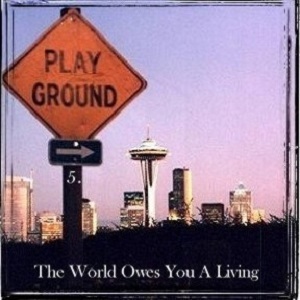
Extraordinary Discourse Special: The World Owes You A Living 5 Today's Extraordinary Discourse Special is Episode 5, the penultimate episode of The World Owes You A Living suite, a 6-part Millennial Associational Documentary. Lucky enough to have a job? No security, no benefits, invasive surveillance, sexual abuse, desperate rush, no reward, no recognition, kids neglected. Bad for millionaires. Puritan underpinnings. Let's give ourselves freedom with a Guaranteed Livable Income . More On Social Fabric Overwork Drugs Loneliness Of Millionaires Religious Heritage Plenty For Everybody Guaranteed Annual Income R. Buckminster Fuller: "There is enough to go round... handsomely." Click on images for links to previous episodes: Episode 1 Episode 2 Episode 3 Episode 4

Extraordinary Discourse 059

For Radical Adults of 2012 Jobs and the soul Synchronicity, I propose, is the matrix. Or say that any great artwork is a field, that the Masnavi, like the Divan of Hafez, spreads out a spontaneously exploratory, tending region of consciousness. Coleman Barks

Extraordinary Discourse 058

Bon Mot (ley) Stirring the Humanities. Smorgasbord for Progressives. "I am convinced... that sound does something that the other senses do not do, and that is a need, a growing need. Sound addresses the interior man [sic] in a way which the other senses do not. Except for touch, but we can't go round so easily touching everybody. It is the body coming back at you. It has been neglected and now it is going to come back. There is going to be a need for the things that sound can do and that visuals don't."  Helen Thorington

Extraordinary Discourse 057

Indirections To A Better World The Zibaldone , or by full title Zibaldone of thoughts, is a personal journal which contains a large amount of notes written between 1817 and 1832 by Giacomo Leopardi. The title comes from the characteristic of literary composition, as a mixture of thoughts, like the namesake Emilian dish that consists of an amalgam of many different ingredients, and sometimes the term is used to describe a confused heap of people. Although the term was known even before, after the composition of Leopardi the term is used for annotation of notebooks or diaries of random thoughts. "Zibaldone" can also be used disparagingly for speeches or writings without logic, messy, made of heterogeneous ideas. In this original sense, commonplace books were collections of such sayings, such as John Milton's commonplace book. Scholars have expanded this usage to include any manuscript that collects material along a common theme by an individual.